
Combination Product Industry News & Guidance
Sharing device-related information and wisdom
that will help you succeed
Stay Current and Informed.
As a global leader in combination product and medical device development and regulatory approval, Suttons Creek has the experience and the industry connections to be a vital source of information for companies like yours, who work with medical devices and combination products. We produce extensively researched articles that share our know-how and keep you up to date on important business, regulatory & technology issues.

Announcing New Hire Chase Tarnstrom
A few days later, I was in a meeting with our Director of Technical Services, Carolyn Dorgan, talking about our quality management services. As we caught up before digging into work, I told her of my oil change debate. It got us talking about the kind of quality management system tasks that our clients generally overlook with regard to how much easier, more efficient, and cost-effective it is to outsource to experts vs. taking it on internally. The tasks she identified were:

SCI Team Speaks with PODD about Combination Product Outsourcing Trends
A few days later, I was in a meeting with our Director of Technical Services, Carolyn Dorgan, talking about our quality management services. As we caught up before digging into work, I told her of my oil change debate. It got us talking about the kind of quality management system tasks that our clients generally overlook with regard to how much easier, more efficient, and cost-effective it is to outsource to experts vs. taking it on internally. The tasks she identified were:
Top 5 QMS Gaps in Combination Product Development
A few days later, I was in a meeting with our Director of Technical Services, Carolyn Dorgan, talking about our quality management services. As we caught up before digging into work, I told her of my oil change debate. It got us talking about the kind of quality management system tasks that our clients generally overlook with regard to how much easier, more efficient, and cost-effective it is to outsource to experts vs. taking it on internally. The tasks she identified were:

Cybersecurity: Consider the Network, Not Just the Device
On February 2, 2024, the Food and Drug Administration (FDA) issued a final rule to amend the device current good manufacturing practice (CGMP) requirements of the Quality System regulation (QSR) to “harmonize and modernize the regulation.” These updates will take effect on February 2, 2026, giving the industry two years to familiarize with the changes and identify the most efficient ways to implement them.
What should combination product developers and manufacturers look out for in this document? Here are some highlights that will help you strategize your go-forward plan:
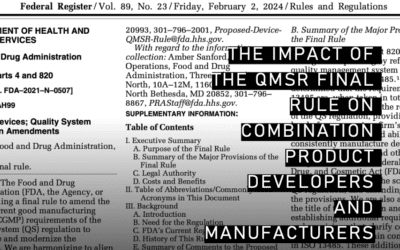
Impact of the QMSR Final Rule on Combination Product Developers and Manufacturers
On February 2, 2024, the Food and Drug Administration (FDA) issued a final rule to amend the device current good manufacturing practice (CGMP) requirements of the Quality System regulation (QSR) to “harmonize and modernize the regulation.” These updates will take effect on February 2, 2026, giving the industry two years to familiarize with the changes and identify the most efficient ways to implement them.
What should combination product developers and manufacturers look out for in this document? Here are some highlights that will help you strategize your go-forward plan:
FDA Experiential Learning Program
This is an opportunity for direct engagement with the FDA and to get your voice heard. Suttons Creek has several ex-FDA reviewers who have participated in this program in the past and know how valuable it can be for reviewers. Through the Experiential Learning Program (ELP) you will educate FDA Staff on the design and manufacturing of your drug delivery devices and development challenges thru open discussion and Q&A.
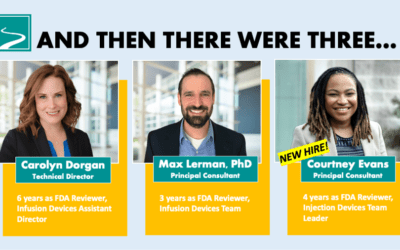
And then there were three…Former FDA Reviewers on the Suttons Creek Team
Suttons Creek is excited to announce the addition of Mickey Burg to our team as Associate Director, Program Management, reporting to our COO and President, Rob Schulz. She joins our ranks with 15 years of medical device experience, working with design controls across multiple platforms, leading large scale and complex design and development programs, including in vitro diagnostics, software as a medical device, instruments, and companion diagnostics.
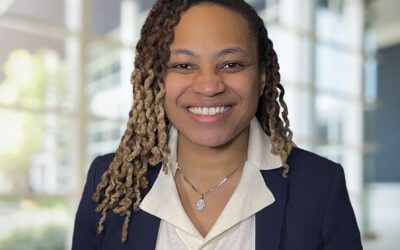
Welcome Courtney Evans to the SCI Team
Suttons Creek is excited to announce the addition of Mickey Burg to our team as Associate Director, Program Management, reporting to our COO and President, Rob Schulz. She joins our ranks with 15 years of medical device experience, working with design controls across multiple platforms, leading large scale and complex design and development programs, including in vitro diagnostics, software as a medical device, instruments, and companion diagnostics.
Looking for more information? Our founder Steve Badelt, PhD and our Suttons Creek consultants have hit the speaking circuit and given addresses on a wide variety of combination product-related topics
Click here if you would like more information on any of these topics, or to discuss the possibility of Suttons Creek consultants speaking to your team or at your next event.
Previous Speaking Engagements Have Included:
“Combination Product Development: Commercial Roles + Responsibilities” / Biopharm New Product Planning Network (NPP), December 2023
“Partnering for Success: Higher level collaboration (within and btw organizations) that delivers Program Success and ROI” / PharmaEd Combination Product Summit, December 2023
“A Technique for Integrating Risk Management Processes for Combination Product Development” / PharmaEd Combination Product Summit, December 2023
“Building Clarity to Address Regulatory Challenges of On-Body Delivery Systems” / AFDO/RAPS Healthcare Collaborative Combination Products Summit, November 2023
“Investigational Combined Use: Industry Perspective & Proposal” / AFDO/RAPS Healthcare Collaborative Combination Products Summit, November 2023
“Connected Health Opportunities and Complexities of Inhalation Devices to Consider Prior to Starting Development” / RESCON Summit, September 2023
“Parallel Development: How multiple development pathways for Combination Products can reduce risk and potentially address more unmet medical needs” / PharmaEd Resources Combination Products Summit, May 2023
“Lessons from Integrating the Pharmaceutical Industry” – Pre-filled Syringes & Auto-injectors Forum / PharmaEd Resources, 2022
“The Intersection of Risk Management & Human Factors in Platform Injection Devices” – Pre-filled Syringes & Auto-injectors Forum / PharmaEd Resources, 2022
“Best Practices for Cross-Functional Engagement Throughout the Combination Product Lifecycle” – PharmaEd Resources Combination Products Summit, 2022
“Software as a Medical Device in the Pharmaceutical Industry” – Combination Produce Lifecycle Management Summit, 2018
“Integration SaMD and Connectivity into Your Company” – Xavier University, 2018
“Design Manufacturing: Accelerating the New Product Commercialization Process” – MD&M West 2017
“Trends in Shaping MedTech Strategy and Innovation” – MD&M West, 2016
“Systems Engineering in Healthcare” – Presented to LMU, 2016
“A Few Technical Insights on Combination Products, and How to Help” – Keck Graduate Institute, 2016
“Systems Engineering in Healthcare” – INCOSE Healthcare Working Group, 2015
“Verification & Validation Best Practices” – CMC Strategy, 2015
“Autoinjector Process Improvement Opportunities” – Presented to Client, 2015
“A Systems Engineering Approach to Risk Management” – AAMI Summit, 2015
“Pharma and Vendor Co-Development Models: Strategy, Execution, and Implications” – PDA, 2015
“Fast Tracking your Scale-Up Strategy with Limited Time and Money Resources” – BioMedTech San Jose, 2014
“Combination Products as a Systems Approach” – PDA, 2014
We’ve Also Delivered the Following Keynotes:
“Device Teams – To Build or Buy?”
“Digital Health Integration”
“Tech Evaluation Process”
“Best Practices for Pharma”
“I want to build a Combination Product, now what?”
“How to set up your Small Pharma Company for Combination Product success”
“How to integrate SaMD into your Pharma Company”
“Digital Health – To Build or Buy?”